
The History of Ledston Estate
Ledston Hall
The oldest part of Ledston Hall is the chapel which was built by the Monks of Pontefract Priory who were substantial land owners of the era. The chapel which was dedicated to St Thomas a Beckett stood alone for a number of centuries, until the Hall and gardens, much of which can be seen today, were annexed.
In 1540 the Priory at Pontefract and all its adjoining lands were surrendered to King Henry VIII who subsequently leased it to tenants. In 1556, the Hall was granted to Henry Witham, the family added a courtyard block to the Mediaeval Chapel and Refectory. The way the building took shape suggests that it was sited on the edge of a precipice which later became a terrace at the rear of the property. Baroness Mary Witham, grand daughter to Henry, was the last Witham to reside in the property – she was married to Sir Thomas Bolles and died in 1662. Her father Henry Witham and wife Elinor were responsible for installing the fireplace and ceiling in the Lady Betty room.
In 1631 the Hall was sold to Thomas Wentworth, Earl of Stafford who was responsible for the addition of the south wing of the Hall, as well as the north west block which was know as ‘The Unfinished Room’. It is reported that in 1631 workmen downed tools and refused to go on when they heard news of the Earl’s impeachment. The room was then bricked up for many years.
King Charles I restored Ledston Estate to Earl Stafford’s son William, however William fled to Holland during the civil war. The Estate was then sold to Sir John Lewis in 1653 who completed the Hall with the addition of the north wing. Following the death of Sir John Lewis in 1671 the Hall was passed to the Lady Elizabeth Hastings family. Lady Betty inherited the Hall at the age of 23 following the passing of her mother, who demonstrated qualities of piety, devotion and charity. Lady Elizabeth Hastings changed the external surroundings of the Hall with the assistance of architect Charles Bridgeman. In 1739, Lady Betty died at the age of 54 and is buried at Ledsham Church. The Ledston Estate passed to Lady Catherine Wheler, Lady Betty’s eldest half-sister. Following the death of the late Granville Wheler in 2004, the Hall and wider Estates of Ledston and Otterden passed into charitable status and is now governed by appointed Trustees.
The Hall was mainly utilised as a private residence for many of the former owners however in the 20th Century the building was utilised as a school, and since the 1960’s a large proportion of the Hall was sat vacant pending renovation.
The History of Otterden Estate
Otterden Place
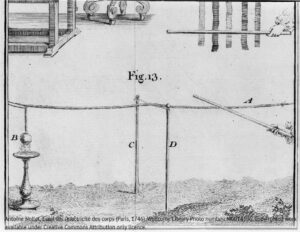
Otterden Place and the parkland surrounding it is a place that played a major role in developing the life we are all able to live today. In the early eighteenth century, around 1729, a dramatic series of electrical experiments were carried out in the grounds of Otterden Place, the experiment has been described as the precursor of the telegraph, the telephone and the internet. Dr Stephen Gray and the Reverend Granville Wheler successfully fed electrical current from a rubbed glass a distance of just over 860 feet along a string supported on silk threads. The Great Gallery within Otterden Place provided an admirably long run of 80 feet, once Gray and Wheler has succeeded at this distance they moved into the Great Barn which provided a distance of several hundred feet. Eventually, they ran a thread out of the Great Gallery window into the garden which extended the total distance of 860 feet. The Great Barn is still used today not only by the Estates gardener, but by Countryside Learning too.
There are many interesting old photos on Historic England’s website of Otterden Place, well worth a look!
Little Snoad Farm
The existing farmhouse at Snoad Farm is believed to date back to the 16th century. It features several old paintings, two being Coats of Arms for the Royal Stuarts. It has been considered by some experts that these may indicate that the property may have once served as a Royalist ‘safe house’.